目录
本文介绍不可变数据类型ImmutableJS和ImmerJS的基本用法,以及它们在React项目中的使用。
背景: 为什会有immutable?
在JavaScript中有引用类型和基本类型。
- 如果 变量a是基本类型,将a赋值给变量b,再修改b的值,则变量a不受影响
- 如果 变量a是引用类型,将a赋值给变量b, 则b与a是同一个对象的引用,若修改b对象的属性,a对象的该属性也会跟着变化。
解决方案就是深拷贝,比如最简单的方式JSON.parse(JSON.stringify(obj))。- 但是深拷贝这种方式比较耗费性能(空间和时间),有没有折中的方案呢? 即修改b的同时不影响a,且比深拷贝节省性能。
- 所以有了immutable.js,简单说就是按需深拷贝。
- 此外还有一个重要原因,开发中经常遇到函数带有副作用,副作用的函数修改了一个引用类型某个属性的值或者浅copy的问题,immutable为此类问题提供了一种优雅的解决方案。
什么是immutable?
Immutable Data就是一旦创建,就不能再被更改的数据- 对
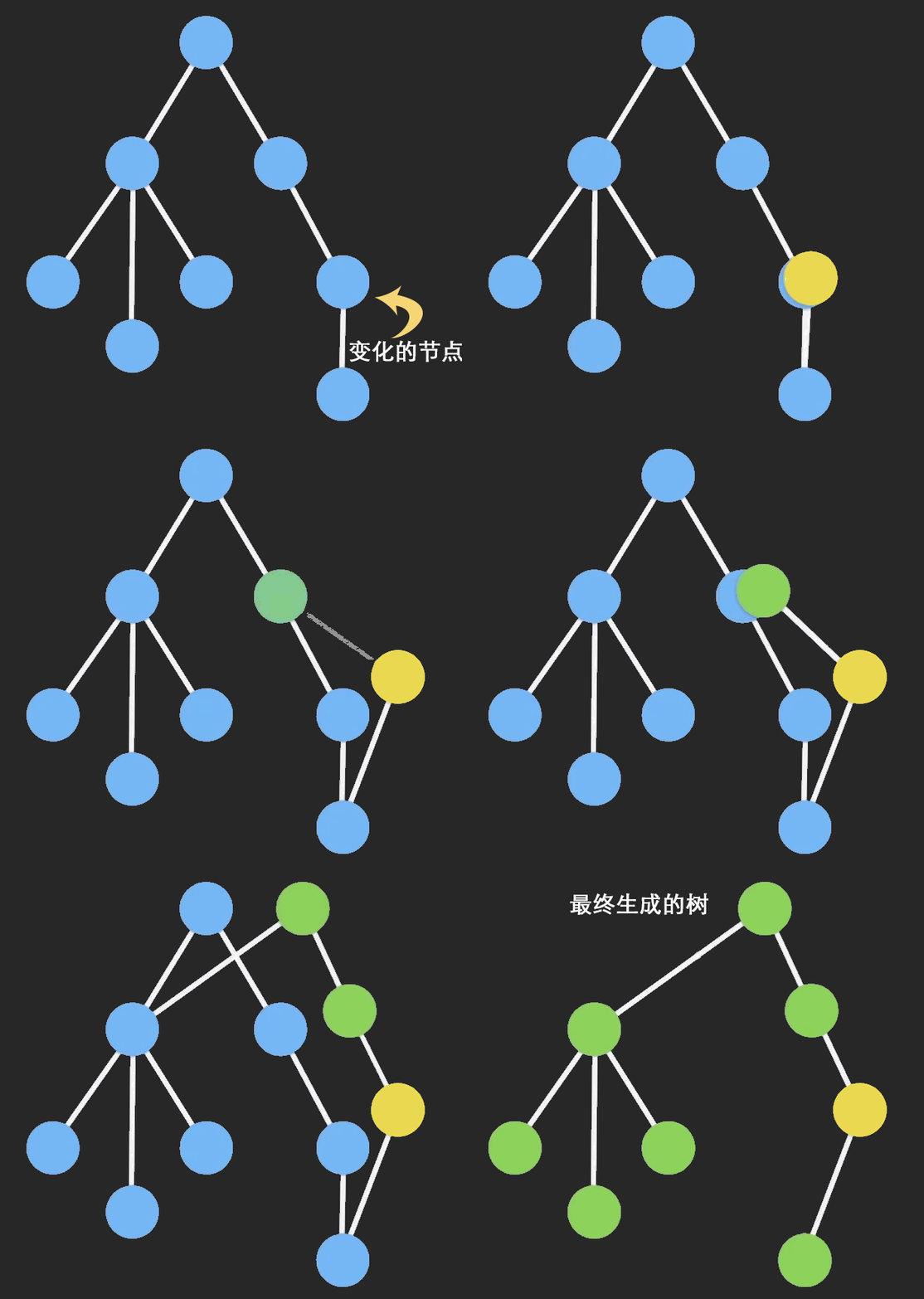
Immutable对象的任何修改或添加删除操作都会返回一个新的Immutable对象; Immutable实现的原理是Persistent Data Structure(持久化数据结构):也就是使用旧数据创建新数据时,要保证旧数据同时可用且不变。同时为了避免deepCopy把所有节点都复制一遍带来的性能损耗,Immutable使用了Structural Sharing(结构共享),即如果对象树中一个节点发生变化,只修改这个节点和受它影响的父节点,其它节点则进行共享。
immutable.js
immutable是Javascript中不可变的集合
官网
Facebook 工程师 Lee Byron 花费 3 年时间打造,与 React 同期出现,但没有被默认放到 React 工具集里(React 提供了简化的 Helper)。它内部实现了一套完整的 Persistent Data Structure,还有很多易用的数据类型。像 Collection、List、Map、Set、Record、Seq。有非常全面的map、filter、groupBy、reduce、find函数式操作方法。同时 API 也尽量与 Object 或 Array 类似。
javascript// 原来的写法
let foo = {a: {b: 1}};
let bar = foo;
bar.a.b = 2;
console.log(foo.a.b);  // 打印 2
console.log(foo === bar);  //  打印 true

// 使用 immutable.js 后
import Immutable from 'immutable';
var foo = Immutable.fromJS({a: {b: 1}});
var bar = foo.setIn(['a', 'b'], 2);   // 使用 setIn 赋值
console.log(foo.getIn(['a', 'b']));  // 使用 getIn 取值,打印 1
// 等价于 foo.getIn(['a']).getIn(['b'])
console.log(foo === bar);  //  打印 false
快速入门API
我没有找关于immutable相关能够通俗易懂快速上手的中文文档,无奈只能自己阅读官方文档,以下内容是我基于官方文档整理的自己的总结
javascript// 前面提到为了消除引用类型及浅拷贝的副作用,引入了immutable概念
// 但是深拷贝这种方式比较耗费性能
// 因此寻找一种既能避免副作用又节省开销的方式--结构共享
// 没有immutable.js我们可能采用下面的方式避免副作用
var a = {b:'B',c:{d:1}};

var b = Object.assign({}, a);
b.b = 'new val bbb';

console.log(b.b)	// 'new val bbb'
console.log(a.b); // 仍旧为 'B'
console.log(a.c === b.c); // true

// 显然 7,8行代码书写起来不方面,
// 如果a.b也是引用类型,还对a.b 重复进行上述两部操作
然而 immutable.js 的使用有一定的上手成本,它自定义了一些数据结构
Map类型
javascript// 如果是对象类型,在immutable中使用 Map
const { Map } = require('immutable');
const map1 = Map({ a: 1, b: 2, c: [1,2] });
// 修改原对象的属性会产生一个新对象, 原对象保持不变
const map2 = map1.set('b', 50);

// 使用 .equals 方法比较
console.log(map1.equals(map2)); // false
// 取值 .get
console.log(map1.get('b'), map2.get('b')); // 2, 50
console.log(map1.get('c') === map2.get('c')); // true, c没有改变
不可变类型比较
引用类型的比较是基于引用地址,而不可变对象的比较是基于集合的值是否一一相同
javascriptconst { Map } = require('immutable');
const map1 = Map({ a: 1, b: 2, c: 3 });
const map2 = Map({ a: 1, b: 2, c: 3 });
map1.equals(map2); // true
// Immutable.is(map1, map2); // true
map1 === map2; // false

const map3 = map2.set('b', 2);
map3 === map2; // true

// 如果一个对象是不可变的,
// 则可以简单地通过对它进行另一个引用而不是复制整个对象来“复制”它。
// 因为这可以节省内存并潜在地提高依赖副本的程序的执行速度(例如撤消堆栈)。
补充: 不可变对象的比较是基于值,算法复杂度, 而引用类型比较算法复杂度 , 因此使用时要考虑性能权衡。
JavaScript优先的API
Immutable.js 具有一个与 ES2015 Array、Map 和 Set 非常相似的面向对象的 API。
| JavaScript | immutable |
|---|---|
| Map | Map |
| Set | Set |
| Array | List |
| Object | fromJS or Map |
javascriptconst { Map, List } = require('immutable');
const map1 = Map({ a: 1, b: 2, c: 3, d: 4 });
const map2 = Map({ c: 10, a: 20, t: 30 });
const obj = { d: 100, o: 200, g: 300 };
const map3 = map1.merge(map2, obj);
// Map { a: 20, b: 2, c: 10, d: 100, t: 30, o: 200, g: 300 }
const list1 = List([1, 2, 3]);
const list2 = List([4, 5, 6]);
const array = [7, 8, 9];
const list3 = list1.concat(list2, array);

// 从上面的示例可以看出
// 1. 与JS API靠拢 如 Array.prototype.concat
// 2. api可以与JS对象互相操作


// 所有 Immutable.js 集合都是可迭代的
const { List } = require('immutable');
const aList = List([1, 2, 3]);
const anArray = [0, ...aList, 4, 5]; // [ 0, 1, 2, 3, 4, 5 ]
嵌套结构
javascript// 嵌套结构
const { fromJS } = require('immutable');
const nested = fromJS({ a: { b: { c: [3, 4, 5] } } });
console.log(typeof nested.toJS()); // 'object'


const nested2 = nested.mergeDeep({ a: { b: { d: 6 } } });
// nested2  { a: { b: { c: [3, 4, 5] }, d: 6 } }

console.log(nested2.getIn(['a', 'b', 'd'])); // 6
console.log(nested2.getIn(['a']).getIn(['b', 'd'])); // 6

const nested3 = nested2.updateIn(['a', 'b', 'd'], value => value + 1);
console.log(nested3);
// Map { a: Map { b: Map { c: List [ 3, 4, 5 ], d: 7 } } }

const nested4 = nested3.updateIn(['a', 'b', 'c'], list => list.push(6));
// Map { a: Map { b: Map { c: List [ 3, 4, 5, 6 ], d: 7 } } }
批处理突变
默认情况下immutable.js中的api每执行一次就会返回一个新的immutable对象
那么如果我只需要最后生成的immutable对象,中间的对象都不要,可不可以只返回新一个新对象呢?
这就用到了 withMutations ,批量处理节省开销,目前只有少数方法 set、push、pop 可直接应用于持久化数据结构
javascriptconst { List } = require('immutable');
const list1 = List([1, 2, 3]);
const list2 = list1.withMutations(function (list) {
  list.push(4).push(5).push(6);
});
console.log(list1.size); // 3
console.log(list2.size); // 6
惰性序列
javascriptconst { Seq } = require('immutable');
const oddSquares = Seq([1, 2, 3, 4, 5, 6, 7, 8])
  .filter(x => {
      console.log('filter', x)
    return x % 2 !== 0
  })
  .map(x => x * x);
// 因为oddSquares是一个immutable对象,是惰性执行的,上述代码不会做任何操作

// 当把immutable对象转换成 JavaScript 对象是 才会执行
console.log(oddSquares.toJS()); // 控制台打印了 ‘filter’


// Range 是一种特殊的 Lazy 序列。
const { Range } = require('immutable');
const a = Range(990, 1010)
//   .skip(100)
  .map(n => {
      console.log(n)
      return -n;
  })
  .reduce((r, n) => r * n, 1);

console.log('---', a) // --- 9.897178826145609e+59
cursor
由于 Immutable 数据一般嵌套非常深,为了便于访问深层数据,Cursor 提供了可以直接访问这个深层数据的引用。
javascriptimport Immutable from 'immutable';
import Cursor from 'immutable/contrib/cursor';

let data = Immutable.fromJS({ a: { b: { c: 1 } } });
// 让 cursor 指向 { c: 1 }
let cursor = Cursor.from(data, ['a', 'b'], newData => {
  // 当 cursor 或其子 cursor 执行 update 时调用
  console.log(newData);
});

cursor.get('c'); // 1
cursor = cursor.update('c', x => x + 1);
cursor.get('c'); // 2
优点
- 降低了mutable带来的复杂性
javascriptfunction touchAndLog(touchFn) {
  let data = { key: 'value' };
  touchFn(data);
  console.log(data.key);
  // 因为不知道touchFn进行了什么操作,所以无法预料,但使用immutable,肯定是value
}
- 节省内存 会尽量复用内存,甚至以前使用的对象也可以再次被复用。没有被引用的对象会被垃圾回收。
javascriptimport { Map} from 'immutable';
let a = Map({
  select: 'users',
  filter: Map({ name: 'Cam' })
})
let b = a.set('select', 'people');

a === b; // false
a.get('filter') === b.get('filter'); // true
Undo/Redo,Copy/Paste
因为每次数据都是不一样的,所有可以存储在数组里,想回退到哪里就拿出对应数据即可
缺点
- 需要学习新的API
- 容易与原生对象混淆
- 虽然
Immutable.js尽量尝试把API设计的原生对象类似,有的时候还是很难区别到底是Immutable对象还是原生对象,容易混淆操作。 Immutable中的Map和List虽对应原生Object和Array,但操作非常不同,比如你要用map.get('key')而不是map.key,array.get(0)而不是array[0]。另外Immutable每次修改都会返回新对象,也很容易忘记赋值;- 当使用外部库的时候,一般需要使用原生对象,也很容易忘记转换。
- 虽然
下面给出一些办法来避免类似问题发生:
- 使用
TypeScript这类有静态类型检查的工具; - 约定变量命名规则:如所有
Immutable类型对象以$$开头; - 使用
Immutable.fromJS而不是Immutable.Map或Immutable.List来创建对象,这样可以避免Immutable和原生对象间的混用;
使用immutable.js优化react
- React可以使用
shouldComponentUpdate()进行性能优化,但它默认返回true,即始终会执行render()方法,然后做Virtual DOM比较,并得出是否需要做真实DOM更新; - 可以在
shouldComponentUpdate周期里执行deepCopy和deepCompare避免无意义的render,但deepFn也很耗时;
javascriptimport { is } from 'immutable';
shouldComponentUpdate: (nextProps = {}, nextState = {}) => {
  const thisProps = this.props || {}, thisState = this.state || {};

  if (Object.keys(thisProps).length !== Object.keys(nextProps).length ||
      Object.keys(thisState).length !== Object.keys(nextState).length) {
    return true;
  }

  for (const key in nextProps) {
    if (!is(thisProps[key], nextProps[key])) {
      return true;
    }
  }

  for (const key in nextState) {
    if (thisState[key] !== nextState[key] && !is(thisState[key], nextState[key])) {
      return true;
    }
  }
  return false;
}
immer
对于处理修改引用类型副作用问题,ImmutableJS 有两个较大的不足:
- 需要使用者学习它的数据结构操作方式,没有 Immer 提供的使用原生对象的操作方式简单、易用;
- 它的操作结果需要通过toJS方法才能得到原生对象,这使得在操作一个对象的时候,时刻要知道操作的是原生对象还是 ImmutableJS 的返回结果,稍不注意,就会产生问题;
javascriptlet currentState = {
    x:[2]
}

let o1 = currentState;
o1.a = 1;

let o2 = {
    ...currentState
};
o2.x.push(3);
console.log(currentState) // { x: [ 2, 3 ], a: 1 }


/* 使用immer解决上述问题 */
import produce from 'immer';
let state = {
    x:[2]
}
let obj1 = produce(state, draft => {
  draft.a = 1;
});
let obj2 = produce(state, draft => {
    draft.x.push(3);
});
// { x: [ 2 ] }     { x: [ 2 ], a: 1 }      { x: [ 2, 3 ] }
console.log(state, obj1, obj2);

// produce方法做了哪些事情?
// 遍历原始对象,依次冻各个属性。
概念说明
produce(currentState, recipe: (draftState) => void | draftState, ?PatchListener): nextState
currentState:被操作对象的最初状态draftState:根据currentState生成的草稿状态,它是currentState的代理,对draftState所做的任何修改都将被记录并用于生成nextState。在此过程中,currentState将不受影响nextState:根据draftState生成的最终状态produce:用来生成nextState或producer的函数producer:通过produce生成,用来生产nextState,每次执行相同的操作recipe:用来操作draftState的函数
使用immer优化react
javascript// 原写法 setState
const { members } = this.state;
this.setState({
  members: [
    {
      ...members[0],
      age: members[0].age + 1,
    },
    ...members.slice(1),
  ]
})

// 现在写法
const { members } = this.state;
this.setState(this.setState(produce(members, draft => {
  draft.members[0].age++;
})))
reduce中使用immer
javascript// produce 内的 recipe 回调函数的第2个参数与obj对象是指向同一块内存
function reducer (state = {name: '章三', age: 12}, action) {
    return immer.produce(state, (draft) => {
        switch(action.type) {
            case 'ADD':
                draft.age++;
                return
            default:
                return;
        }
    })
}

const store = Redux.createStore(reducer);
class App extends React.Component {
    componentDidMount() {
        store.subscribe(() => {
            this.forceUpdate();
        })
    }
    render() {
        const state = store.getState();
        return <div>
            <p>{state.name}今年{state.age}周岁</p>
            <button onClick={() => store.dispatch({type: 'ADD'})}>过生日</button>
        </div>
    }
}
const root = ReactDOM.createRoot(document.getElementById('root'));
root.render(<App/>);
完整案例 redux-immer.html
本文作者:郭敬文
本文链接:
版权声明:本博客所有文章除特别声明外,均采用 BY-NC-SA 许可协议。转载请注明出处!